The Perfect Wave-Riding Companion
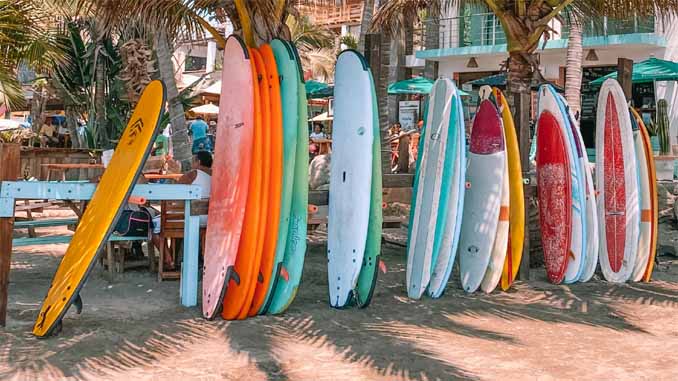
Surfboards are not one-size-fits-all; they come in a variety of types and feature sets designed to cater to the diverse needs and preferences of surfers. Whether you’re a beginner, intermediate, or an advanced rider, understanding the different surfboard types and their unique features is essential in ensuring that you have the right tool for your next wave-riding adventure. In this article, we’ll explore some of the most common surfboard types and their distinctive features.
Longboards: The Classic Cruiser
Features: Longboards are typically 8 to 11 feet long and characterized by their stability and ease of use. They have a rounded nose and a wide, stable platform for a comfortable, laid-back surfing experience. Longboards are ideal for beginners, providing an excellent platform for learning the basics of paddling, balancing, and wave-catching.
Funboards: Versatility And Maneuverability
Features: Funboards, also known as mini-malibus, combine elements of both longboards and shortboards. They are typically between 7 and 8 feet long and provide a great balance of stability and maneuverability. Funboards are excellent for intermediate surfers looking to progress beyond longboarding and experiment with more dynamic moves.
Shortboards: High-Performance Precision
Features: Shortboards are the go-to choice for advanced surfers seeking precision and responsiveness. They are typically 5 to 7 feet long, characterized by a narrow, pointed nose, and a sharp, high-performance rocker. Shortboards are designed for quick, agile maneuvers and are often used in professional competitions. They are ideal for experienced surfers looking to push the boundaries of their performance.
Fish Boards: Speed And Agility
Features: Fish boards are recognizable by their distinctive swallowtail shape and are typically between 5’4″ and 6’4″ in length. These boards offer a great combination of stability and speed, making them ideal for surfers looking to capitalize on smaller, mushier waves. Fish boards are known for their fun and playful nature in the water.
Gun Boards: Conquering Big Waves
Features: Gun boards are specialized surfboards designed for riding larger, more powerful waves. They are typically longer and narrower, with a pointy nose and a prominent rocker to handle steep drops. Gun boards are reserved for experienced surfers and are a must for those seeking the thrill of conquering massive waves.
Hybrid Boards: Best Of Both Worlds
Features: Hybrid boards combine features from various surfboard types to create a versatile and adaptive option. They offer a blend of stability, maneuverability, and wave-catching ability. Hybrid boards are suitable for a wide range of surfers, providing the best of both longboarding and shortboarding worlds.
Soft-Top Boards: Beginner-Friendly Durability
Features: Soft-top boards are constructed with a foam deck that offers excellent stability and durability. They are perfect for beginners as they provide a forgiving and buoyant platform. Additionally, the soft top reduces the risk of injuries during falls, making them a safe choice for newcomers.
Mini Simmons: Speed And Retro Style
Features: Mini Simmons boards are short, wide, and thick with a distinctive parallel outline and deep double concave bottom. They are known for their incredible speed and a retro aesthetic. Mini Simmons boards are favored by surfers who appreciate a unique and stylish approach to wave-riding.
Surfboard types and their features play a pivotal role in determining the kind of surfing experience you’ll have. Whether you’re looking for stability, speed, agility, or precision, there is a surfboard tailored to your needs. By understanding the characteristics and applications of different surfboard types, you can make an informed choice that will enhance your surfing adventures and keep you riding the waves with confidence. So, take your time exploring these options and choose the surfboard that best aligns with your surfing aspirations.