Origins, Construction, And Cultural Impact
What Is The History Of The Eiffel Tower?
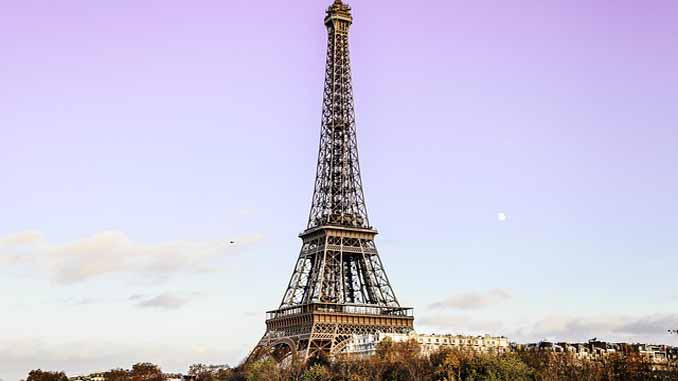
The Eiffel Tower is one of the most iconic landmarks in the world, recognized globally as a symbol of Paris, France, and a testament to architectural ingenuity. Its rich history spans over 130 years and has played a significant role in shaping the city’s identity. Below, we explore the origins, construction, and cultural impact of this remarkable structure.
Construction And Origins
Design And Purpose: The Eiffel Tower was designed by French engineer Gustave Eiffel and his engineering company, Eiffel et Cie, for the 1889 World’s Fair, officially known as the Exposition Universelle.
The main goal of the tower was to showcase France’s industrial and engineering prowess to the world during the exposition held to celebrate the 100th anniversary of the French Revolution.
Design Competition And Approval: In 1884, a design competition was held to select a proposal for the tower. Out of over 100 designs, Eiffel’s submission stood out for its innovative use of iron and its unique aesthetic.
The French government initially met resistance, as many viewed the tower as an eyesore and questioned its utility. However, Eiffel’s proposal was eventually approved, and construction began in 1887.
Construction And Challenges
Building The Tower: The construction of the Eiffel Tower took just 2 years, 2 months, and 5 days, making it an impressive feat of engineering for the time.
The tower stands at 324 meters (1,063 feet) tall, with over 18,000 iron parts and 2.5 million rivets that hold it together.
Construction required innovative techniques, such as the use of pulleys, scaffolding, and cranes, to lift heavy iron components to high altitudes.
Criticism And Acceptance: Initially, the Eiffel Tower faced widespread criticism. Many believed it was a monstrosity and feared it would overshadow Paris’s classic architecture.
However, over time, the structure became beloved, symbolizing Parisian modernity and innovation. Today, it is cherished as a symbol of French pride and global culture.
Cultural And Historical Impact
Symbol Of Paris: The Eiffel Tower quickly became the most recognizable landmark in Paris and is now considered a global icon of French culture.
It has appeared in countless artworks, photographs, and films, symbolizing not only the city of Paris but France itself.
Tourism And Modernization: Today, the Eiffel Tower attracts millions of tourists annually, serving as one of Paris’s top attractions.
It has undergone various renovations and updates, including the addition of observation decks, restaurants, and lighting features, enhancing its role as a center of attraction and modern entertainment.
Scientific Contributions: In addition to its cultural significance, the Eiffel Tower has served as a scientific observation post, particularly during World War I and II.
It has also been used in various technological and meteorological research efforts due to its height and visibility.
The Eiffel Tower’s history is a testament to human innovation, perseverance, and the changing perceptions of art and engineering. From its controversial beginnings to becoming one of the most visited landmarks globally, the Eiffel Tower continues to stand as a symbol of Paris’s enduring charm and the spirit of modernity.