From Republic To Imperial Rule
What Is The History Of The Roman Empire?
The Roman Empire was one of the most powerful and influential empires in history, stretching across vast territories in Europe, the Middle East, and North Africa. Its history, spanning over a millennium, transformed the ancient world and left a lasting legacy that continues to shape modern society.
The Rise Of Rome And The Republic
Founding Of Rome: The city of Rome is traditionally believed to have been founded in 753 BCE. According to legend, Rome was founded by Romulus, who became its first king. The early years of Rome were marked by struggles between the aristocracy (the patricians) and the common people (the plebeians).
The Roman Kingdom transitioned into a Republic around 509 BCE after the overthrow of the last Roman king, ending monarchical rule and establishing a system of governance based on elected officials.
The Roman Republic (509-27 BCE): During this period, Rome expanded its influence throughout the Italian Peninsula, gradually gaining control over neighboring regions. The Republic was governed by elected officials, such as consuls, senators, and tribunes, who represented different classes of Roman society.
Rome’s expansion was driven by military conquests, leading to the establishment of a vast network of colonies and alliances. The Punic Wars against Carthage (264-146 BCE) were particularly significant, resulting in Roman dominance over the Mediterranean.
The Transition To The Roman Empire
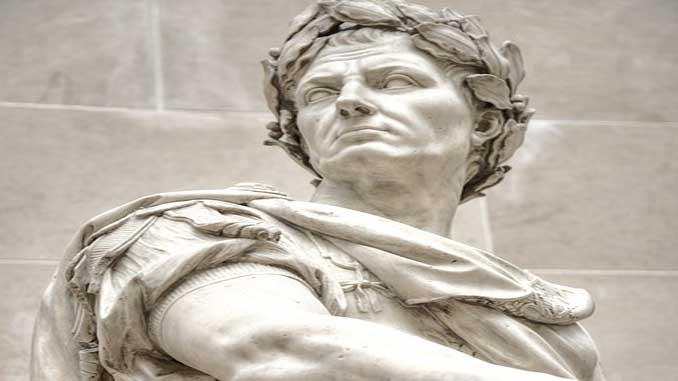
Julius Caesar And The End Of The Republic: By the late 1st century BCE, internal conflicts, political instability, and the rise of powerful generals like Julius Caesar led to the decline of the Roman Republic. In 44 BCE, Caesar declared himself dictator and began reforms aimed at centralizing power. His assassination in 44 BCE plunged Rome into further turmoil.
The Rise Of Augustus (27 BCE): The Republic officially came to an end with the rise of Octavian (later known as Augustus), who became the first Roman emperor in 27 BCE. Augustus established the Principate, a form of government that maintained the facade of republican institutions while consolidating power under a single ruler.
Augustus’ reign marked the beginning of the Roman Empire and brought about a period of relative stability and prosperity known as the Pax Romana (27 BCE – 180 CE).
The Expansion And Reach Of The Roman Empire
Territorial Expansion: Under Augustus and his successors, the Roman Empire expanded rapidly, reaching its peak under emperors like Trajan and Hadrian. At its height, the Roman Empire covered much of Europe, North Africa, and the Middle East.
The empire’s influence stretched from the Atlantic Ocean in the west to the Persian Gulf in the east. Key provinces such as Gaul, Spain, Egypt, and Mesopotamia were integrated into the empire, bringing a wealth of resources and people under Roman rule.
Roman Governance And Infrastructure: The Roman Empire was known for its advanced system of governance, which included a well-organized bureaucracy, military, and legal system. Roman law became a cornerstone of legal systems in later Western civilization.
The empire also built extensive infrastructure, including roads, aqueducts, and cities, facilitating trade, communication, and the movement of troops, helping to unify distant regions.
Decline And Fall Of The Roman Empire
The Crisis Of The Third Century: By the 3rd century CE, the Roman Empire began to face significant internal and external challenges. The empire suffered from economic decline, political instability, and constant invasions by barbarian tribes like the Goths and Vandals.
The Division of the Empire into the Western and Eastern Roman Empires (due to administrative difficulties) further weakened its unity.
The Fall Of The Western Roman Empire: In 476 CE, the Western Roman Empire officially fell when the last Roman emperor, Romulus Augustulus, was deposed by Germanic invaders. The Eastern Roman Empire, later known as the Byzantine Empire, continued to thrive until its fall in 1453.
Legacy: The Roman Empire’s collapse ushered in the Middle Ages but left behind a profound cultural and political legacy. Roman law, architecture, language (Latin), and governance influenced the development of Europe, shaping the foundations of modern Western civilization.
The Roman Empire was a defining force in shaping the ancient and medieval world. From its rise as a republic to its transformation into an empire, Rome’s influence on governance, law, language, and culture continues to resonate today, making it one of the most significant empires in human history.