A Step-By-Step Guide
How Do 3D Printers Work?
3D printers are advanced machines that create physical objects by layering materials based on digital designs. Unlike traditional manufacturing methods that rely on subtractive processes (like cutting or carving), 3D printing builds objects layer by layer, making it a more efficient and versatile approach. The technology has revolutionized industries such as healthcare, aerospace, automotive, and consumer goods by enabling rapid prototyping, customization, and even mass production.
How 3D Printers Function
Digital Model Creation: A 3D printer starts by receiving a 3D model from a computer-aided design (CAD) file. The model contains detailed instructions on the dimensions, structure, and design of the object.
3D printing software slices the digital model into thin, horizontal cross-sections, creating a blueprint for the printer to follow layer by layer.
Material Selection: 3D printers use a variety of materials depending on the desired properties of the final product. Common materials include plastics like PLA (polylactic acid) and ABS (acrylonitrile butadiene styrene), as well as advanced materials like metals, ceramics, and even biomaterials.
Different types of 3D printers (FDM, SLA, SLS, etc.) use different materials and printing methods to suit various applications.
Printing Process: The 3D printer begins by heating and extruding the selected material. For FDM (Fused Deposition Modeling) printers, a filament is melted and deposited layer by layer.
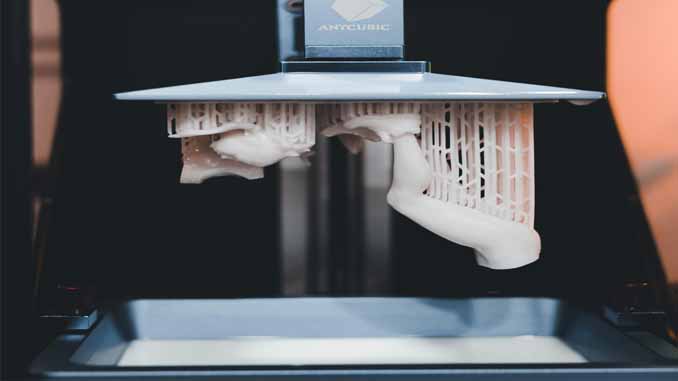
In SLA (Stereolithography) and DLP (Digital Light Processing) printers, liquid resins are cured layer by layer using UV light.
Each layer is added on top of the previous one, building the object from the bottom up.
Layer-By-Layer Building: The printer continues depositing layers, gradually building up the object in a process known as additive manufacturing.
Each layer can be as thin as 0.1mm, ensuring high levels of precision and detail.
Post-Processing: Once the object is printed, it may require post-processing, such as cleaning, curing, sanding, and finishing, to enhance its appearance and durability.
Applications Of 3D Printing
Healthcare: 3D printing is used to create prosthetics, custom implants, and medical devices, improving patient care and reducing production costs.
Aerospace And Automotive: Aerospace companies use 3D printing to create lightweight, complex components like engine parts and structural components, reducing manufacturing time and costs.
Consumer Products: From customized consumer goods like personalized jewelry to household items, 3D printing enables mass customization.
Education And Research: 3D printing facilitates rapid prototyping, research, and development, allowing students and researchers to bring ideas to life quickly and affordably.
Benefits Of 3D Printing
Cost-Efficiency: 3D printing reduces the need for expensive molds and tooling, cutting production costs.
Customization: It allows for personalized, custom designs that meet specific needs without the need for large-scale production.
Speed And Flexibility: Prototyping and production cycles are faster, reducing time-to-market for new products.
Waste Reduction: Additive manufacturing produces less material waste compared to traditional subtractive methods.
Challenges And Limitations
Material Limitations: Not all materials can be printed with current 3D printing technologies.
Printing Speed: 3D printing can be slower compared to traditional manufacturing methods for large-scale production.
Complexity: Some high-precision or large-scale objects require more advanced printers and processes.
3D printing is a transformative technology that continues to evolve, offering new possibilities in manufacturing, design, and customization. Its ability to create complex, high-detail objects layer by layer makes it a crucial tool across numerous industries, from healthcare to aerospace, and beyond.