The Art Of Shaping Clay On A Potter’s Wheel
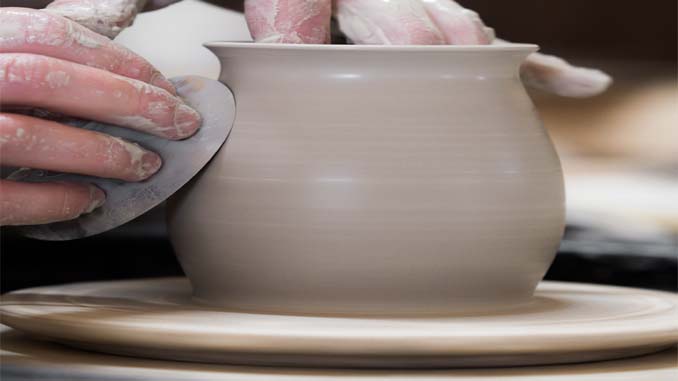
Wheel-throwing, often simply called “throwing,” is a ceramic technique that has captured the imaginations of artists and enthusiasts for centuries. This process involves shaping clay on a potter’s wheel, and it has been instrumental in the creation of functional and artistic pottery. Let’s explore the history, techniques, and enduring appeal of wheel-throwing in the world of ceramics.
A Glimpse Into History: Wheel-throwing has an ancient history, with its origins dating back to around 4000 BCE in regions such as Mesopotamia and China. These early potters used simple, hand-driven wheels to craft their vessels. The technology evolved over time, leading to the development of foot-powered and, eventually, electric pottery wheels, which are widely used today.
The Process: The wheel-throwing process begins with a lump of clay centered on the wheel head. Proper centering is a crucial skill that requires careful hand and foot coordination to achieve balance and symmetry. Once centered, the potter uses their hands to shape the clay, pulling it upward and outward, manipulating the form as it spins on the wheel. The wheel’s rotation allows for the creation of consistent and precise shapes.
Technique And Skill: Wheel-throwing is a craft that demands patience and skill. Potters must control the speed and pressure applied to the clay to achieve the desired form. Various tools, such as ribs and wooden or metal shaping tools, are used to refine the shape, create textures, and add decorative elements. The level of precision required in wheel-throwing makes it both an art and a science, where mastery comes through experience and practice.
Functional And Artistic Pottery: One of the most remarkable aspects of wheel-throwing is its versatility. Potters can create a wide range of functional items, including cups, bowls, plates, and vases. The uniformity and precision offered by wheel-throwing make it well-suited for producing pottery used in daily life. At the same time, many artists utilize the wheel-throwing technique to create decorative and sculptural pieces, pushing the boundaries of what can be achieved with clay.
Enduring Appeal: The enduring appeal of wheel-throwing lies in its combination of tradition and innovation. While the fundamentals of this technique have remained largely unchanged for millennia, contemporary potters continue to experiment with new forms, textures, and glazes. The timeless nature of wheel-throwing makes it accessible to both beginners and experienced potters, offering endless opportunities for exploration and self-expression.
Wheel-Throwing Studios And Communities: Many communities around the world have wheel-throwing studios where aspiring potters can learn and practice this art form. These studios provide not only the necessary equipment but also a supportive community of fellow enthusiasts. The exchange of knowledge, ideas, and inspiration within these communities contributes to the growth and evolution of wheel-throwing.
Wheel-throwing is a cornerstone of ceramic art that continues to thrive and inspire. Its rich history, technical challenges, and capacity for both functional and artistic expression make it a beloved practice for individuals of all skill levels. Whether in the hands of a master potter or a novice, the potter’s wheel remains a vehicle for turning a lump of clay into a vessel of artistry and craftsmanship, connecting us to the timeless traditions of pottery.