The World’s Tallest Mountain
And Its Majestic Height
What Is The Highest Mountain In The World?
The highest mountain in the world is Mount Everest, standing tall at an elevation of approximately 29,032 feet (8,848 meters) above sea level. Located on the border between Nepal and Tibet (China), Mount Everest is the highest point on Earth, making it a symbol of human exploration and mountaineering achievement.
Mount Everest’s Location And Significance
Mount Everest’s Location: Everest lies in the Himalayan mountain range, which spans five countries: Nepal, China, Bhutan, India, and Pakistan. However, most climbers approach Everest from Nepal due to its southern base camp.
The mountain marks the border between Nepal’s Sagarmatha Zone and Tibet’s Autonomous Region, both of which have unique cultural and geographical significance.
Cultural And Historical Importance: Everest holds deep cultural and spiritual significance for the people of Nepal and Tibet. The local Sherpa communities regard the mountain as sacred, believing it to be the home of gods.
The mountain has been a symbol of human endurance and determination, inspiring climbers from around the world to undertake the challenging journey to its summit.
The Challenge Of Climbing Mount Everest
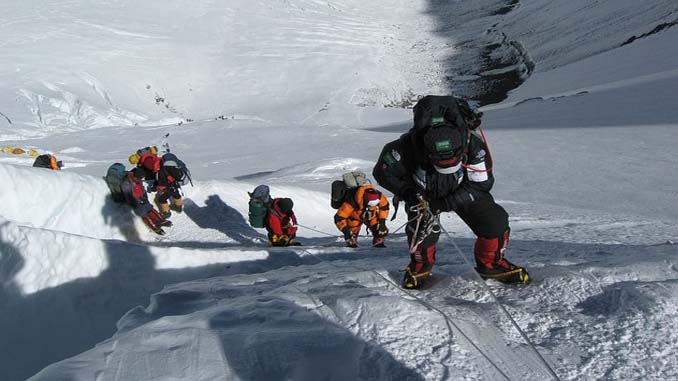
Difficulties And Risks: Climbing Everest is one of the most dangerous and physically demanding feats. The harsh conditions, including extreme cold, high-altitude sickness (like hypoxia), unpredictable weather, and avalanches, pose significant risks to climbers.
The death rate on Everest is relatively high, with numerous fatalities reported over the years due to accidents and health complications at high altitudes.
Climbing History: The first confirmed ascent of Everest was made on May 29, 1953, by Sir Edmund Hillary from New Zealand and Tenzing Norgay, a Sherpa from Nepal. Their achievement remains one of the most celebrated feats in mountaineering history.
Since then, thousands of climbers have attempted to conquer Everest, leading to a steady increase in summit attempts, especially after commercial expeditions became more accessible in the 1990s.
Everest’s Changing Height
Measuring Everest: The height of Mount Everest has been the subject of numerous measurements and adjustments over the years due to advances in technology. Recent measurements have indicated slight differences due to shifting tectonic plates and geological activity.
In 2020, a Chinese survey determined that Everest’s official height is 8,848.86 meters (29,031.7 feet), slightly higher than earlier estimates.
Geological Factors: The Himalayas continue to rise due to the ongoing collision between the Indian and Eurasian tectonic plates. This geological activity ensures Everest remains the world’s tallest peak.
Legacy And Modern Expeditions
Tourism And Economy: Climbing Everest has become a major source of tourism and revenue for Nepal, with thousands of climbers, guides, and trekkers visiting the region each year. However, overcrowding and environmental concerns have raised challenges related to sustainable tourism.
The mountain’s economic impact also extends to the Sherpa communities, who have served as guides and porters for countless climbers.
Scientific Exploration: Everest continues to be a site for scientific research, particularly in studying the effects of high-altitude living and climate change. Its glaciers are melting due to rising temperatures, making the study of Everest increasingly relevant for understanding global environmental shifts.
Mount Everest remains not only the highest mountain in the world but also a symbol of human ambition, resilience, and exploration. Its towering presence continues to draw adventurers, scientists, and tourists, shaping our understanding of both physical limits and the planet’s dynamic nature.
