Pickleball Court Dynamics
Pickleball, a sport that blends the best elements of tennis, badminton, and table tennis, has taken the world by storm. This rapidly growing paddle sport is celebrated for its accessibility and the fun it brings to players of all ages. To truly excel at pickleball, it’s essential to understand the dynamics of the court itself. In this article, we’ll explore the nuances of pickleball court dynamics, highlighting the factors that make the game both challenging and rewarding.
Court Size: A standard pickleball court measures 20 feet wide and 44 feet long. This compact court size is one of the defining characteristics of the sport, making it possible to play in areas not traditionally designed for racket sports. The reduced court dimensions require players to adapt to a more confined playing area and be nimble on their feet.
The Non-Volley Zone: Also known as “the kitchen,” this is a crucial area on the court that extends 7 feet from the net on each side. The kitchen is a no-volley zone, meaning that players cannot hit the ball out of the air within this zone. This rule encourages strategic play, as players must carefully position themselves to avoid faulting.
The Baseline: The back line of the court is where serves must originate. Players serve from behind this line, and the serve must clear the non-volley zone on the opposite side of the court. The baseline is a key starting point for each point and plays a role in determining the position of the serving team.
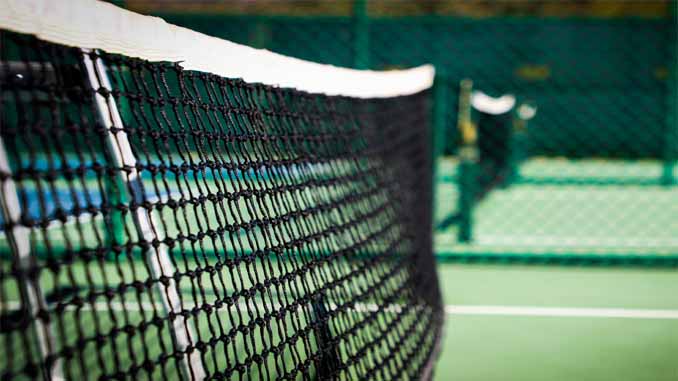
The Net: The pickleball net stands 34 inches at the center, which is lower than traditional tennis or badminton nets. The lower net height demands precise and controlled shots, particularly during the serve and volleys near the net.
Serving Boxes: Each side of the court is divided into two serving boxes. The serving team must serve diagonally into the opponent’s service box, following specific serving rules. The diagonal serves create unique angles and placement opportunities, adding to the dynamic court dynamics.
Doubles vs. Singles: Pickleball is typically played in both doubles and singles formats, with different strategies and court dynamics in each. In doubles, players work as a team, cover the court together, and employ coordinated strategies. In singles, players have more court to cover, leading to increased lateral movement and reliance on individual skills.
Shot Placement: The compact court size emphasizes the importance of shot placement. Strategic placement of shots can force opponents out of position and create openings for offensive plays. Players often aim for the corners and sidelines to put pressure on their adversaries.
Movement: Pickleball court dynamics necessitate quick and agile movement. Players must be ready to cover the court, transition from the baseline to the non-volley zone, and engage in fast-paced volleys at the net. Efficient footwork and positioning are crucial for success.

Volleying: The game’s rules, such as the double bounce rule, dictate when players can engage in volleys (hitting the ball out of the air). This rule affects court dynamics by promoting more controlled, strategic plays and fewer aggressive volleys, particularly during the opening shots of a point.
Understanding pickleball court dynamics is essential for players looking to excel in this exciting sport. The unique dimensions, the presence of the non-volley zone, and the emphasis on precise placement and controlled volleys all contribute to the distinctive and dynamic nature of pickleball. Whether you’re new to the game or a seasoned player, mastering these court dynamics is the key to enjoying the strategic and exhilarating world of pickleball.