Rules And Regulations Of Pickleball
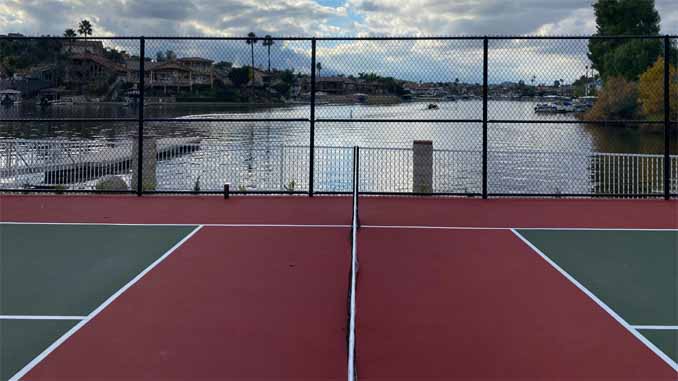
Pickleball, the exciting and rapidly growing sport that combines elements of tennis, badminton, and table tennis, has garnered a strong following worldwide. With its inclusive nature and accessible court size, it’s a game that appeals to players of all ages and skill levels. To truly enjoy pickleball and compete effectively, it’s crucial to understand the rules and regulations that govern the sport. In this article, we’ll explore the key rules and regulations of pickleball.
Court Dimensions: A standard pickleball court is 20 feet wide and 44 feet long, with a non-volley zone (the kitchen) extending 7 feet from the net on each side. The kitchen is a no-volley zone, meaning you can’t hit the ball out of the air within this area.
Scoring: Pickleball is played to 11 points, and you must win by at least two points. In singles, each side gets one serve, while in doubles, both players on the serving team have the opportunity to serve.

The Serve: The serving team starts the game from the right side of the court and must serve underhanded from the baseline. The serve must clear the net and land in the opposing service court, diagonally across from the server. It must also bounce once before being struck by the receiving team. The serving team continues to serve until they commit a fault.
Double Bounce Rule: After the serve, both teams must allow the ball to bounce once before they can engage in a volley (a non-bouncing exchange). This rule ensures that rallies begin with a level of control and reduces the possibility of quick, aggressive plays.
Faults: Common faults in pickleball include stepping into the kitchen while volleying the ball, hitting the ball out of bounds, failing to clear the net, or volleying the ball from the kitchen without letting it bounce. Faults result in the opposing team being awarded a point or the service.
Let Serve: If the serve hits the net and lands in the correct service court, it is called a “let serve” and is retaken without penalty.
Non-Volley Zone Violation: Players are prohibited from volleying the ball from the non-volley zone (the kitchen). Stepping into the kitchen while hitting the ball is a fault.
Serving Position: When serving, players must have one foot behind the baseline and inside the court boundaries. The other foot must remain in contact with or behind the baseline until the ball is struck.
In-Out Calls: Players are responsible for making their own in-out calls. If there’s a dispute, a referee or a mutually agreed-upon third party can be called to make a ruling.
Fault Limits: A team is allowed only one fault (failed serve) per side-out. If the serving team faults, the receiving team takes over, and the game continues.
Rotation: In doubles, there’s a rotation rule, where players must switch sides after each successful point scored. This helps ensure fairness and equal distribution of court time.
Pickleball’s rules and regulations are designed to maintain a fair, enjoyable, and competitive playing environment. Understanding these rules is essential for both newcomers and experienced players alike. Mastery of the rules not only allows for smoother and more enjoyable games but also ensures that the sport remains a welcoming and inclusive pastime for players of all levels and backgrounds. So, whether you’re a novice or an expert, embracing the rules of pickleball is a critical step in mastering this fantastic sport.