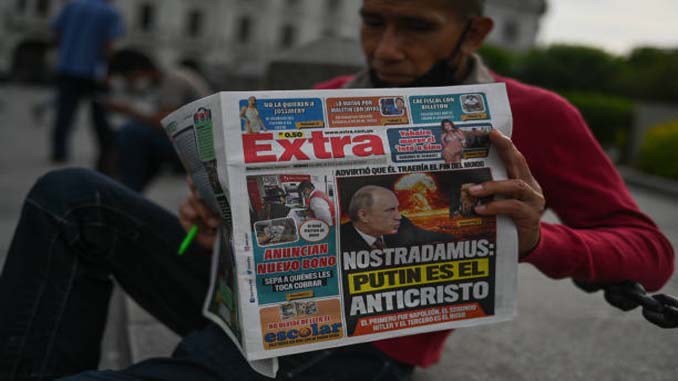
The enigmatic prophecies of Michel de Nostredame, better known as Nostradamus, have transcended the centuries and continue to captivate the minds of believers and skeptics in modern times. Born in 1503 in France, Nostradamus’ work, particularly his magnum opus “Les Prophéties,” remains a subject of fascination and debate. Many people have sought to interpret his cryptic quatrains in the context of contemporary events, looking for connections between his writings and the modern world.
One of the key aspects that make Nostradamus’ prophecies relevant in modern times is the ambiguity of his verses. His quatrains are famously cryptic, written in a way that allows for multiple interpretations. This vagueness has enabled enthusiasts to find connections between his writings and various significant events or trends.
Some interpretations suggest that Nostradamus may have foreseen modern technological advancements. Quatrain 1 from Century 6 has been associated with the development of technology:
“When those of the arctic pole are united together,
Great terror and fear in the East:
Newly elected, the great trembling supported,
Rhodes, Byzantium stained with Barbarian blood.”
While the mention of the “arctic pole” and “East” may not directly point to technology, some have interpreted this quatrain as a reference to geopolitical shifts and the global distribution of power. In the modern world, technological advancements play a pivotal role in shaping global politics and alliances, which is reflected in Nostradamus’ writings, albeit indirectly.
Another modern interpretation of Nostradamus’ predictions involves climate change. While Nostradamus did not explicitly mention this issue, some enthusiasts have drawn parallels between his quatrains and the environmental challenges faced in the 21st century. Quatrain 2 from Century 1 is one example:
“The trembling of the earth at Mortara,
The tin islands of St. George half sunk;
Drowsy with peace, war will arise,
At Easter in the temple abysses opened.”

These verses could be seen as a metaphorical representation of the impact of climate change, with “the trembling of the earth” alluding to seismic shifts caused by rising global temperatures. The “tin islands of St. George half sunk” might be connected to the threat of sea-level rise due to melting ice caps, a significant concern related to climate change.
It’s crucial to emphasize that Nostradamus’ writings are open to wide-ranging interpretations, and the connections to modern times can be speculative and subjective. Nostradamus did not possess direct knowledge of the complexities of contemporary technology or the specific challenges posed by climate change.
Nostradamus’ predictions in modern times remain a source of fascination and debate. While some interpret his quatrains as having connections to technology or contemporary issues like climate change, these links are speculative and should be approached with skepticism. Nostradamus’ cryptic language and historical context make it challenging to ascertain the accuracy of these interpretations. Regardless of their predictive accuracy, Nostradamus’ prophecies continue to captivate our imaginations and remind us of the enduring appeal of mystery and enigma in our quest to understand the future.