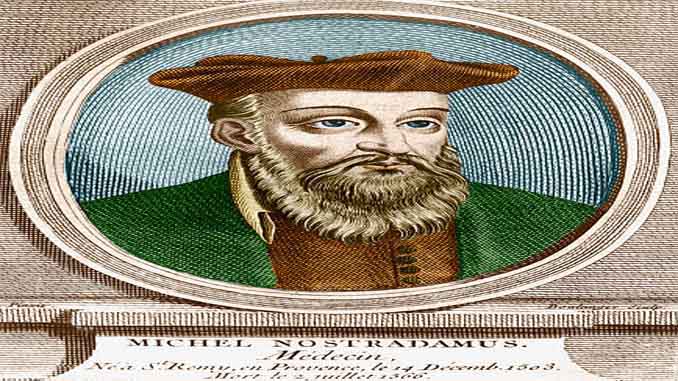
For centuries, the prophetic writings of Michel de Nostredame, popularly known as Nostradamus, have been the subject of fascination and debate. While he is renowned for his predictions of global events, political upheavals, and scientific advancements, one area where his insights have generated particular interest is in the realm of natural disasters.
Nostradamus, a French physician and astrologer born in 1503, is often regarded as a visionary whose words continue to perplex believers and skeptics alike. His most famous work, “Les Prophéties,” is a collection of enigmatic quatrains that some claim contain references to natural calamities. Although Nostradamus is not often associated directly with the prediction of specific natural disasters, his vague yet intriguing verses have been interpreted in various ways to suggest that he might have possessed insights into these catastrophic events.
One of the most well-known interpretations of Nostradamus’ prophecies relates to natural disasters is his supposed prediction of the Great Fire of London in 1666. In Quatrain 97 of Century 2, he wrote:
“The blood of the just will commit a fault at London,
Burnt through lightning of twenty threes the six:
The ancient lady will fall from her high place,
Several of the same sect will be killed.”
While this quatrain appears to describe a fiery event in London, skeptics argue that it is open to a wide range of interpretations and could apply to any number of incidents. Proponents of Nostradamus, however, suggest that his cryptic language conceals the true nature of the disaster, leaving room for various interpretations.

Nostradamus’ prophecies have also been linked to earthquakes. In Quatrain 87 of Century 10, he wrote:
“At forty-five degrees, the sky will burn,
Fire to approach the great new city:
In an instant a great scattered flame will leap up,
When one will want to demand proof of the Normans.”
This quatrain is often seen as a reference to a major earthquake striking a new city, causing widespread destruction and panic. Nostradamus’ use of metaphorical language and symbolism has made it possible for his followers to find connections between his writings and historical natural disasters.
Furthermore, some interpreters have connected Nostradamus’ quatrains to tsunamis and floods. Quatrain 1 of Century 4 mentions “floods,” and Quatrain 3 of Century 6 talks about a “great wave.” While these quatrains are intriguing, they are sufficiently vague that they can be applied to numerous events after the fact.
It’s important to note that Nostradamus’ writings are highly cryptic, and his quatrains can be interpreted in a multitude of ways. This vagueness has led to a great deal of skepticism about his true prophetic abilities. Critics argue that Nostradamus’ verses are intentionally obscure and can be molded to fit almost any historical event, including natural disasters.
Nostradamus’ insights into natural disasters remain a subject of debate. While some believe that his quatrains contain hidden references to these catastrophic events, others argue that the interpretations are largely subjective. The mystique surrounding Nostradamus and his ability to foresee the future continues to captivate the imaginations of people around the world, leaving us to ponder the true nature of his prophetic talents and the enduring enigma of his writings.