Nature’s Artistry In Fields
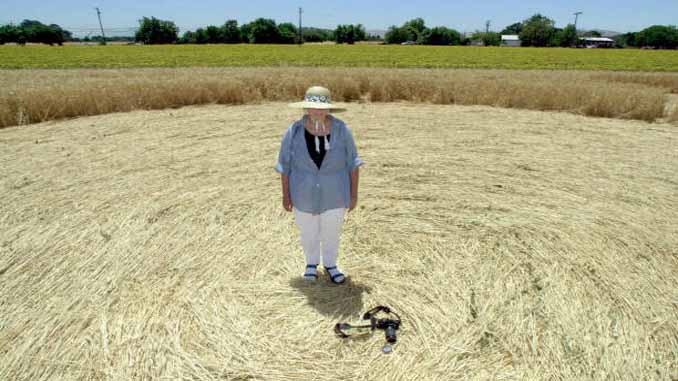
Crop circles, with their intricate designs etched into fields of crops, have long been a source of fascination and mystery. While some attribute them to elaborate hoaxes or even extraterrestrial intelligence, many crop circles can be explained by natural phenomena. In this article, we explore the natural explanations for these intriguing formations.
Wind And Atmospheric Conditions
One of the most common natural explanations for crop circles involves the interplay of wind and atmospheric conditions. Some crop circles are thought to be created when whirlwinds or vortices occur, often referred to as “dust devils.” These whirlwinds can generate powerful winds that bend and flatten the crops, forming circular patterns. The precise geometric shapes in some crop circles can be attributed to the organized flow of air currents during these events.
Plants’ Response To Physical Stress
Crops, particularly cereal grains like wheat and barley, are known to exhibit unique responses to physical stress. When plants are subjected to mechanical pressure, they can exhibit what’s known as “node elongation.” This phenomenon causes the plants to stretch and bend at specific nodes, resulting in a bending pattern that forms a circular shape when viewed from above. These natural responses to stress can create crop circles with intricate designs that mimic human-made ones.
Electromagnetic Fields
Some crop circle enthusiasts propose that electromagnetic fields may play a role in the formation of these patterns. It’s suggested that these fields could affect the growth of crops, causing them to bend and form circular shapes. While this theory is intriguing, scientific evidence linking electromagnetic fields to crop circle formation remains inconclusive.

Animal Activity
Animal activity, particularly from small mammals like voles and field mice, can also be responsible for some crop circle patterns. These creatures often create underground tunnels and pathways within crops, which can lead to the bending and flattening of the plants above. The result is circular patterns that resemble crop circles.
Meteorological Factors
Weather conditions, including rain and humidity, can influence the growth of crops and, in turn, contribute to crop circle formation. High levels of moisture in the soil, for example, can make the plants more pliable and prone to bending under their weight, forming circular patterns. Likewise, heavy rain can lead to lodging, where crops bend or flatten due to their increased weight.
While crop circles have often been attributed to paranormal or human-made origins, natural explanations provide plausible alternatives for many formations. Understanding these natural processes and the role they play in creating crop circles helps demystify the phenomenon. While some crop circles may indeed remain unexplained, exploring the natural factors contributing to their formation reminds us of the complex interplay between nature and our environment, producing artistry that can be as mysterious as it is beautiful.