Exploring The World Of Embroidery Stitches
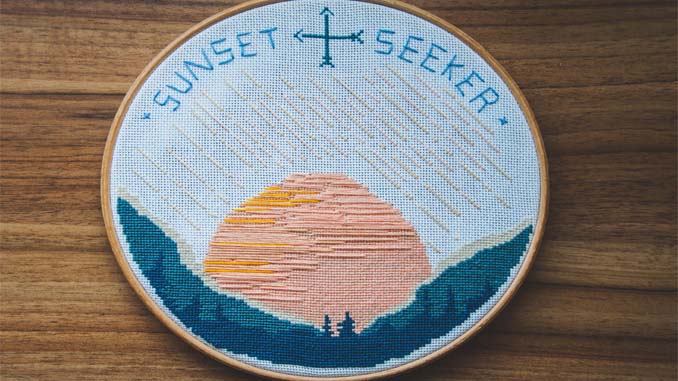
Embroidery, a form of textile art that dates back thousands of years, is a testament to human creativity, patience, and precision. At the heart of this craft lies a diverse range of embroidery stitches, each a unique brushstroke on the canvas of fabric. From the basics to the most intricate, embroidery stitches have the power to breathe life into fabric, creating intricate patterns, images, and designs.
The Building Blocks: Basic Embroidery Stitches
Every embroidery journey begins with a handful of fundamental stitches that serve as the foundation for more complex techniques.
Running Stitch: A basic stitch formed by passing the needle and thread through the fabric, creating a straight line of evenly spaced stitches. The running stitch is often used for outlines and simple embellishments.
Backstitch: Similar to the running stitch but with the added feature of being more secure. The backstitch involves doubling back through the previous stitch, creating a continuous line. It’s commonly used for fine lines and lettering.
Satin Stitch: A technique where stitches are placed closely together, covering a larger area. This creates a smooth, satin-like surface. It is frequently used for filling shapes and adding vibrant colors to designs.
Variations and Flourishes: Advanced Embroidery Stitches
As embroiderers become more proficient, they delve into a treasure trove of advanced stitches, each with its unique characteristics and uses.
French Knot: A highly decorative stitch that creates raised, textured dots. These knots can be used for flowers, eyes, or other small, ornamental details.
Chain Stitch: A looping stitch that forms a chain-like line. It’s versatile and can be used for both lines and filling areas, creating a textured, rope-like appearance.
Feather Stitch: This stitch resembles the delicate fronds of a feather, with stitches on either side of a central line. It is often used to depict leaves, vines, or other organic elements.
Bullion Knot: A stitch that creates a raised, coiled effect. It’s perfect for floral and three-dimensional embroidery work, adding depth and dimension.
Embroidery In Culture And Tradition: Regional Stitches
Different cultures around the world have their unique embroidery stitches and styles, often reflecting the traditions, values, and artistic sensibilities of their communities.
Sashiko (Japan): Known for its geometric, repetitive patterns, sashiko uses running stitches to create designs that are both decorative and functional. It’s often used for mending and reinforcing fabric.

Crewelwork (England): This traditional embroidery style employs wool threads and intricate stitches to create detailed designs, often depicting pastoral scenes and floral motifs.
Hedebo (Denmark): Characterized by its delicate cutwork and intricate whitework embroidery, Hedebo is a reflection of Danish needlework traditions, often used for table linens and clothing.
Embroidery As An Art Form: Modern Stitches And Innovations
Embroidery has evolved to include modern, innovative stitches, often driven by a fusion of traditional techniques with contemporary art. Artists are pushing the boundaries of embroidery, incorporating new materials, technology, and concepts, leading to a renaissance in the craft.
Embroidery stitches are the vocabulary of an ancient art form, allowing artists to communicate and express their creativity on fabric. Whether you’re a beginner or an experienced hand, the world of embroidery stitches is a never-ending journey of exploration, innovation, and inspiration. As you pick up your needle and thread, remember that each stitch is a brushstroke on a canvas, telling your unique story, one thread at a time.